Studio
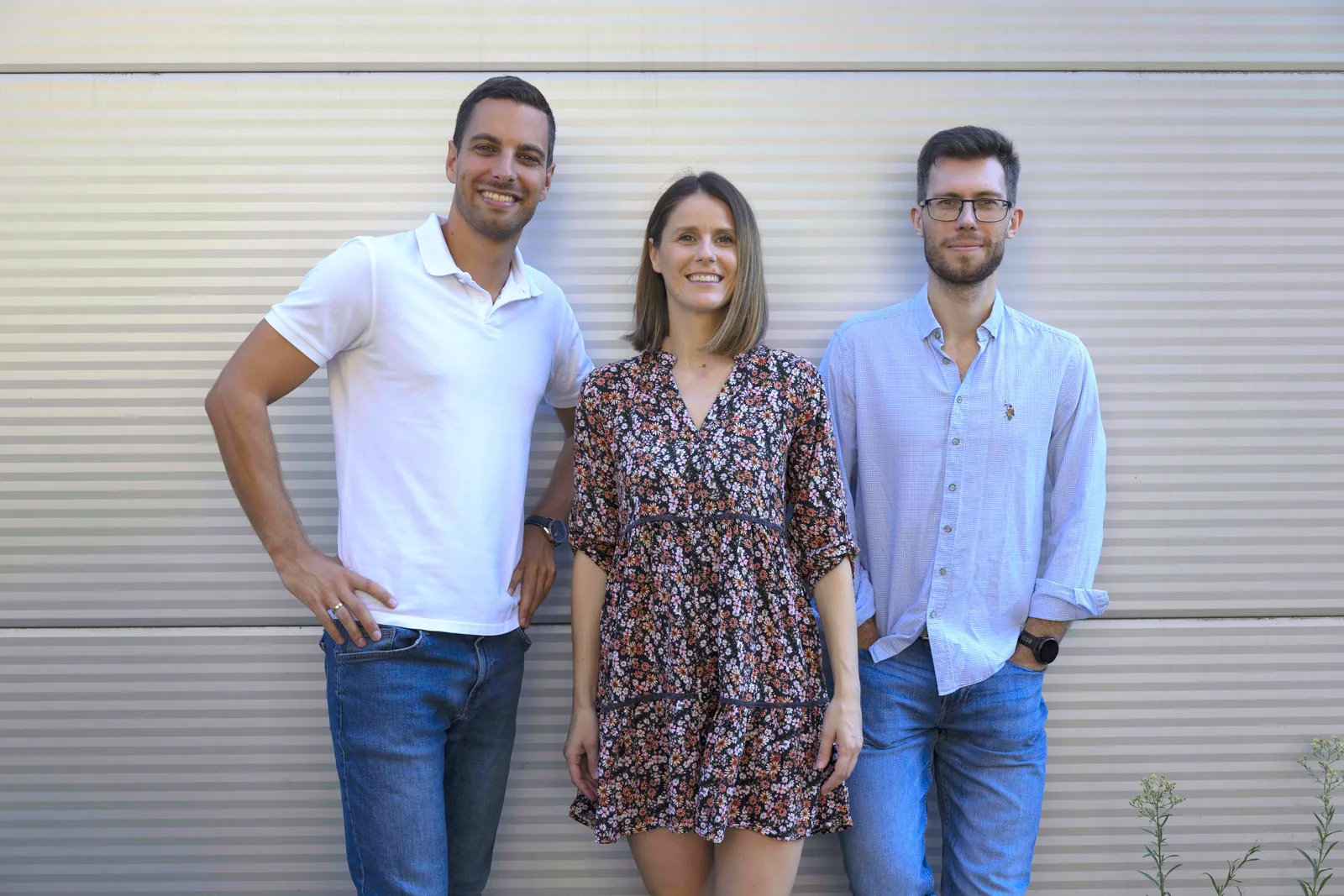
Photo credit: Nemanja Miscevic
The three of us have spent years around startups. Two of us came from the accelerator and startup ecosystem, while the third had worked in VC and had also built his own startup. We worked with hundreds of founders and teams, evaluated ideas, supported fundraising, and watched companies grow, change direction, succeed or very often fail.
At some point, we all reached a similar conclusion - we wanted to do more than advise, invest in, or support startups. We wanted to get closer to the actual companies - getting deeper into the business model, understanding what makes it work, and being involved in the decisions that shape the company.
When we quit our jobs we started looking for what to build next. What brought us together was not one particular startup idea - it was a shared way of thinking about how we could build new ventures in a better way.
We had seen what happens when you build too much, too early
After working with hundreds of startups, we began to see the same patterns - people spending months building a product before properly testing whether the problem was important enough to solve. We saw great products, but without the experience or team around them to turn those products into a company.
We also noticed an opportunity: the most valuable venture ideas come from people who know a particular industry very well from the inside - people who have spent years working with customers, leading teams and experiencing problems that outsiders might not even recognize. Yet, especially in markets with less developed startup infrastructure, they rarely make the leap into entrepreneurship, despite having the experience to build and lead a business. We saw an opportunity to bridge that gap - helping them turn market knowledge into new ventures by validating the opportunity and building it together.
Jelena
Building from zero is what we kept coming back to
For me, the most exciting part has always been having the ownership to build something from the ground up, make decisions, figure out what works, and see the impact and real results of what you build.
My journey into entrepreneurship began in 2013, when I joined the Business Incubator of Technical Faculties, a pioneering startup incubator in Serbia where many first-time entrepreneurs gained their initial knowledge and support for building startups. I became part of an incubator team and later one of the first employees of the Science and Technology Park, working to build a stronger environment for startups in Serbia. As part of a small team, I was involved in building almost everything from the ground up - from finding our first client companies and shaping our offer to fundraising, investor relationships, partnerships and setting up internal processes. With no predefined roles, I learned to take ownership, bring ideas, fundraise for them and turn them into reality. Over time, I went on to lead the Innovation Department, managing a team of 10 people and an annual business development budget of €1 million.
In the last ten years, I spent most of my time working with early-stage startups, running acceleration programs and building environment aimed to enable startup success. I contributed to fundraising €2 million, which we distributed through an acceleration program to a portfolio of 75 early stage startups through grants and mentorship support. During that period, I had the opportunity to meet many founders at the very beginning of their journeys - when the problem was still being validated and there were far more assumptions than answers. I saw how much uncertainty those first steps bring, especially for people transitioning their careers and lacking initial funding or venture building experience around them.
When I decided one year ago to leave my own job and build something new, I experienced that uncertainty from a different side. Even after years of working with startups, making the decision to leave a stable career and start from zero was not easy.
That made the idea behind Flash Ventures personal for me. I have been lucky to meet some truly remarkable founders and play a small part in their journeys. Now, my mission is to discover talent with that potential in emerging ecosystems across Europe and turn their experience, ideas and ambition into new ventures.
Alex
We had also been on both sides of the table
My entrepreneurial journey started as an exchange student in a joint program with MIT, where I had an opportunity to learn entrepreneurship from the best of the best. That is where I tried my first steps in a startup world as friends of mine and I worked on a project in precision oncology working on both technology and business validation, as well as got first experience in pitching, getting to the semi-final of that year’s MIT 100K pitch contest.
As I returned home from the exchange, I became part of the most nationally vibrant, at that time, entrepreneurial community at Skolkovo technopark. I joined as a co-founder and CSO the startup devoted towards creating wearables-embedded emotion recognition solutions. We closed a successful pre-seed round that allowed us to develop both proprietary electronics and algorithms. As is most common for technology-centric solutions, we underwent several pivots going from the consumer solution to a tool used in product development and customer research. Eventually we came to the conclusion that the accuracy of the technology did not meet the standards required by the customer and had to close the project.
That was the time when I transitioned to the other side of the entrepreneurship world, joining as an analyst at a life science venture fund, later growing into the position of the head of the healthtech track. Over my six-years tenure across two vintages of the fund I screened thousands upon thousands of startups and have experienced every possible dynamic a fund and startup can go through. From successful deals and successful exits to the deals that fell apart after signing the term sheets, failure of the portfolio companies and skipped deals just to see that startup being acquired half a year later.
When I invested the healthtech share of the latest fund I stood at a crossroads as I could either search for a different fund to work for or even open my own, the idea that I entertained for a while. However, eventually I decided against it in search of opportunities that could provide a deeper hands on experience yet where I could utilize both my technical skills and portfolio management skills. This was when I met Jelena and Bojan through some shared friends as we presented to each other almost the same idea of the venture builder but in different market segments and it was most natural to join forces.
Bojan
Building a company is more than building a product
My story with finance started 13 years ago, as a student at the Faculty of Economics, University of Belgrade. I was struck early on by how much daily decisions in finance, banking, and insurance shape people’s lives, often invisibly and without them even realizing it.
After graduating, the road led me, not into the bank or financial institution, but directly into the startup ecosystem. What followed can only be described as an entrepreneurial infection: the pull of building business models around raw ideas, finding the right market entry, managing a team’s expectations, and operating under constant resource constraints, all while pursuing a vision ambitious enough to attract the investors who could fund it.
For nearly eight years, my focus was on validating business assumptions with as few resources as possible, and determining quickly whether the thesis holds, or what needs to change, before capital and enthusiasm run out. Because, when both of them disappear, so does the startup.
Once a model proved itself, the next question was how to raise capital in order to scale it. I spent a large part of that time managing investor relations and removing fundraising friction. More than 120 investors (mostly European VCs) were part of that process.
Beyond this, I have also built something myself, a family business centered around a physical product in agriculture. That meant innovating within a highly regulated area of food technology while navigating slow and fragmented distribution channels. Determining the right channel for the right offer, for each stakeholder across that value chain, taught me the same lesson from the opposite vantage point: how to reduce the friction between what a business creates and what the market genuinely demands. It is precisely why I recognize a founder’s dilemmas early, regardless of which side of the table I am on.
Based on the previous experience, together with Jelena and Alex, the Flash Ventures model is designed. We want to partner, to join forces, combine experiences and networks, but also to share the resources and risk, aiming to build scalable businesses. We want to be a trusted and transparent partner, that experienced industry individuals can rely on to change their careers and build their own ventures.
Why a venture studio?
Putting our journeys together, the idea for Flash Ventures became quite natural. We didn’t want to become a consulting agency telling founders what they should do or to invest in companies and wait to see what happens. We wanted to build new ventures in a new way for founders underserved by startup infrastructure.
We wanted to combine our experience, network, and ability to execute with people who have the ambition and expertise to become founders. We wanted to work on the problem together, validate the opportunity before committing too much time and capital, and build the company alongside the founder when there is something worth pursuing. Especially in emerging startup ecosystems, we think this model can make a real difference.
There are talented people who could build great companies but don’t have an experienced co-founder or team around them. There are strong problems that haven’t yet been turned into companies. And there are people with years of industry experience who are ready for something new but don’t know where to start. We want to make that step easier.
If that sounds like the kind of environment you want to build in, we’d love to hear from you.